Can you resonate with those words? Do you find yourself having strong stressors and emotions when you listen to the news or read the newspaper? You may find yourself experiencing personal challenges, financial stress, high-pressure jobs, parenting, caregiving, or dealing with a chronic illness. I find myself wondering what’s next or what else am I going to be expected to handle. If you too find yourself with a sense of struggle, being irritable, difficulty concentrating or lacking motivation. Those are sign’s you may be emotionally exhausted.
Emotional exhaustion tends to happen slowly over time and people can find themselves feeling worn out and drained. According to the Mayo Clinic, emotional exhaustion includes emotional, physical and performance symptoms.
Emotional symptoms can include:
Anxiety
Depression
Feeling hopeless
Irritability
Lack of Focus
Lack of Motivation
Negative Thinking
Sense of Being Trapped
Tearfulness
Physical symptoms can include:
Fatigue
Headaches
Lack of Appetite
Muscle Tension
Poor Sleep
Upset Stomach
Performance symptoms can include:
Difficulty Completing Tasks
Increased Absences
Isolation
Lowering Commitments
Not Meeting Deadlines
The middle of the poem goes on to talk about getting out of the heaviness and shifting your focus.
Draw alongside the silence of stone
Until its calmness can claim you.
Be excessively gentle with yourself.
Strategies to reduce emotional exhaustion can include:
Balancing Your Thoughts
Eating A Balanced Diet
Exercising
Minimizing Stressors
Practicing Mindfulness
Sleep
Heaviness can lift. That temporary state can be overcome and when it does, you will feel light again.
Gradually, you will return to yourself,
Having learned a new respect for your heart
And the joy that dwells far within slow time.
You are stronger than you realize—every challenge you’ve faced has built a resilience within you that can carry you through this too. You will rise stronger than before.
Written by: Amanda Bohlen, Family and Consumer Sciences Educator, OSU Extension Washington County
Reviewed by: Megan Taylor, Family and Consumer Sciences/4-H Educator, OSU Extension Union County
One of the earliest and most-welcomed signs of spring are the flowers who have persevered through the winter. As colder temperatures subside and give way to spring, crocuses respond by pushing new shoots up through the earth and opening their cheery blossoms. A bright purple crocus bloom against a backdrop of snow or last year’s fallen leaves is a picture of resilience in the face of difficulty. This can remind us that there is always potential for change and growth, even during difficult times. In order to bring about positive change in our culture, or ourselves, we begin with hope.
Fostering hope has been shown in various research studies to help decrease symptoms of depression and improve mental health, self-esteem and the ability to function with a chronic illness. In a study of older adults, hope was linked to better physical and mental health and health behavior outcomes.
To better understand what hope is, we can look at the science behind it. Researcher Chan Hellman from the University of Oklahoma’s Hope Research Center has explored the components of hope and found 3 distinct ingredients: goals, pathway and agency. Goals are the thing we are striving for and become the cornerstone of hope. Pathway is the ability to identify routes toward goals and to find new pathways (problem solve) around obstacles, if necessary. Agency (willpower) is the ability to sustain motivation to move along these pathways. Hellman asserts: “Hope is the belief that your future will be better than today and you have the power to make it so.” No matter the difficulties we may face, hope is accessible to each and every one of us. Unlike optimism, which is simply the expectation of a better future, hope is action-oriented and a skill that can be learned.
To foster hope in your life, you may need to re-frame your thinking and form new habits. Hope experts recommend these tips:
Break goals into smaller chunks so they are more manageable.
Stay connected. Hope is a social gift. It is not something that happens in isolation within us. It happens in relationships with each other. We should be more intentional in our social connections. Our connectedness with others or with something greater than ourselves is one of single best predictors of hope.
Celebrate small successes. It is important to acknowledge and celebrate what you have accomplished to boost your willpower to reach the next small goal.
At the heart of change is our ability to understand the way things are right now in our lives… and that we can begin to imagine the way things could be. This is where hope is born. So, when you see early spring flowers, let them remind you to hold on to hope and believe that things will get better, and the courage to take some action to bring about change.
Writer: Shannon Carter, Extension Educator, Family & Consumer Sciences, Ohio State University Extension, Fairfield County, carter.413@osu.edu
Reviewer: Erin Ruggiero, Extension Educator, Family & Consumer Sciences, Ohio State University Extension, Medina County, ruggiero.46@osu.edu
Long K. N., Kim E. S., Chen Y., Wilson M. F., Worthington E., Jr, VanderWeele T. J. (2020). The role of hope in subsequent health and well-being for older adults: an outcome-wide longitudinal approach. Global Epidemiology. 2, 100018. https://doi.org/10.1016/j.gloepi.2020.100018
Steffen, L.E., Cheavens, J.S., Vowles, K.E. et al. Hope-related goal cognitions and daily experiences of fatigue, pain, and functional concern among lung cancer patients. Supportive Care Cancer 28, 827–835 (2020). https://doi.org/10.1007/s00520-019-04878-y
My husband, who works in IT, has a shirt that says, “Hope is Not a Strategy.” While this may be true in his line of work and many others, I dare say hope IS at least a partial strategy in many areas of life. For mental and behavioral health professionals hope is most definitely a widely-used strategy! When someone is struggling with a mental health challenge or substance use issue, professionals remind them there IS HOPE of recovery, as it can be difficult for folks to remember people CAN and DO recover.
This time of year can be more difficult for some people, especially those who struggle with Seasonal Affective Disorder (SAD) or it’s milder form Winter Depression. Most people develop symptoms in late fall or early winter that persist until late Spring or Summer. Symptoms may include:
Feeling listless, sad, or down most of the day, nearly every day
Losing interest in activities you enjoyed
Having low energy and feeling sluggish
Sleeping too much
Experiencing carbohydrate cravings, overeating and weight gain
Difficulty concentrating
Feeling hopeless, worthless, or guilty
Having thoughts of not wanting to live
Spring and Summer SAD (SAD can occur ANY time of year) symptoms include:
Trouble sleeping (insomnia)
Poor appetite
Weight loss
Agitation or anxiety
Increased irritability
Even those who don’t have these symptoms may struggle at times, and HOPE can be a strategy to help. You can help folks who may be struggling to remember there is HOPE! There are people (mental health professionals) who can and want to help. There are things people can do for themselves to help manage and/or alleviate symptoms. There are people who love and care about them and seeking help is in NO WAY a sign of weakness.
Some self-care tips to maintain good mental health include:
It took me a long time to realize that I experience SAD because my symptoms start in late summer/early fall. When everyone else is giddy with the changing season, I am filled with dread. I have written about it several times to let others know that SAD does not just occur now. My symptoms actually start to improve as many others start to experience them. One key point about SAD is the re-occurrence of symptoms and the easing of them around the same time each year. Once I FINALLY realized why I unlike the rest of the planet, do not particularly care for fall, I was able to own it and be more proactive in helping myself and others to understand and cope better.
If you or someone you know or love has thoughts of suicide, please call the suicide and crisis hotline at 988 to be connected immediately to a mental health professional. There is HOPE!
A couple months ago I wrote a blog about teaching our children to fly (from the nest). In three weeks, I will be moving my youngest child in to her college dorm. After surviving her senior year, I must now prepare for her departure and for the empty nest that will result.
As a parent, my life has not revolved solely around my children. I have tried to participate in things I enjoy for myself. I realize that to be the best parent I can be, I need to have things that bring me joy that arenot dependent on my children. I want my kids to see that adults can have fun and do things that make them happy and still be good parents.
As my daughter prepares for this exciting new time, I am filled with mixed emotions. I am happy she’s doing well and that she wants to take care preparing herself for campus living. I try to avoid thinking about her leaving because I don’t want to dampen her excitement. I know I will likely experience some empty nest syndrome, though I don’t think it will be too severe.
Feeling sad, anxious, and stressed about an empty house.
Unable to sleep or eat well due to being distracted by your thoughts.
Reverting to memories you shared with your kids when they were still living at home.
Reminiscing about their childhood and going through things they left behind.
Feeling useless or worthless since you no longer need to take care for your children.
Languishing—having less energy and motivation to do things you used to or want to do.
smiling couple
Empty nest syndrome can last for years, though most parents adjust to the new situation in about 2 months. Some parents look forward to the freedom from parenting daily, while others dread the thought of not having the kids around. Some, like me, have mixed feelings of excitement and sadness that my role as a parent of a child has ended. Regardless how parents feel, there are things they can do to help reduce empty nest syndrome:
Talk to your partner and your child about your feelings.
Reconnect with your partner or other significant people.
Respect your child’s new independence.
Focus on the future and the upsides of an empty nest, not the past.
Invest in yourself by doing things you enjoy and practicing self-care.
Don’t feel guilty for having fun and enjoying this new chapter.
Join a support group for empty nesters.
Seek professional help if feelings of sadness, anxiety, or depression persist.
As you navigate this new chapter, give yourself and your young adult some grace. Focus on getting to know your adult child, relish all you both have accomplished and look forward to all that is to come. Since the only constant in life is change, it is best to embrace it.
Author: Misty Harmon, Family and Consumer Sciences Educator, Ohio State University Extension, Perry County, harmon.416@osu.edu
Reviewer: Shannon Carter, Family and Consumer Sciences Educator, Ohio State University Extension, Fairfield County, carter.413@osu.edu
Did you know that fish is like a multivitamin for our brains? Fish and shellfish supply the nutrients, vitamins and omega-3s essential for brain development, strong bones, a healthy heart and immune system. This time of year, many people are looking for ways to “boost” their immune system . Good nutrition is extremely important in supporting a strong immune system, which can offer protection from some chronic health diseases. Unfortunately, even though eating fish is like a multivitamin for our brain, almost 90% of Americans, both children and adults, do not meet the recommendation for seafood! I have to admit, I too fall into that 90% group of not eating enough seafood each week and I absolutely love seafood.
Dietary Guidelines for Americans recommends eating fish as part of a healthy eating pattern. It is recommended to eat at least 8 ounces of seafood, based on a 2,000 calorie diet. Those who are pregnant or breastfeeding, the recommendations are to consume between 8 and 12 ounces per week of a variety of seafood from choices that are lower in mercury.
Here are some tips from seafoodnutrition.org that I plan to try this month to encourage my family to meet the seafood recommendations:
Eat a variety of seafood: Fish that is rich in omega-3s include tuna, salmon, trout, and sardines. Grilling and broiling are great cooking methods and don’t forget to add some spices to enhance the flavor..
Keep seafood on hand: Be sure to stock your pantry with canned seafood. Canned salmon and tuna are tasty, healthy and easy to prepare. Keep frozen fish in the freezer for any easy meal. Kids love fish sticks!
Buy budget friendly: It doesn’t have to be expensive to eat seafood. Check out weekly ads and sales, and buy in bulk. I personally like to buy several pounds of salmon and freeze into individual serving sizes for future use. The picture at the top of this blog is an example of this method after pulling out fish from my freezer and grilling it.
Put it on a salad or a sandwhich: Top a salad with canned tuna or salmon or use it for sandwiches in place of deli meats. You can also cook extra of your favorite fish and use the leftovers for another meal or two – a great way to get your seafood twice a week.
Keep seafood safe: Keep seafood refrigerated until ready to use and then cook fish to an internal temp of 145°F, until it easily flakes with a fork. Cook shrimp, lobster, and scallops until they are opaque (milky white).
I challenge you to be creative over the next month and eat seafood at least twice a week.
Written by: Susan Zies, Extension Educator, Family and Consumer Sciences, Ohio State University Extension, Wood County, Zies.1@osu.edu
As health restrictions are lifting from the pandemic, I have been able to interact with more people in person. When others ask how I’m doing, I say “fine” … but what I really want to say is “meh.” I’m doing okay… not depressed… but not great either. I find that I really have to psyche myself up for another week of work, and for certain tasks at work and home. I usually rise to the occasion, but it takes a lot of energy to overcome the urge to seek the solitude or even the isolation that I thought I couldn’t wait to escape.
A colleague pointed me to an enlightening article on languishing and it captured so much of what I have felt in the past few months. Psychologists describe languishing as slightly withered, wilted or faded. The pandemic has left a lot of people feeling this way. Initially, the pandemic may have incited feelings of fear, anxiety, dread and paralysis… and as these feelings have faded, they have left languish in their wake.
Emory University Professor Corey Keyes has been publishing about languishing since 2002, but it took the pandemic to bring greater attention to this work. Keyes describes languish as the absence of feeling good about life and lacking purpose or meaning in one’s life. Languish is the middle ground between depression and optimal well-being or flourishing. While depression is clinically diagnosable with the presence of certain behaviors, languish is feeling indifference, emptiness, and stagnation. Keyes’ research found languish to be a predictor of developing depression and anxiety as well as increased risk of suicide attempts. We need to acknowledge and treat languish so it doesn’t turn into depression later, and so we can live our best lives.
Name your feelings – It helps to identify emotions and give them a name. Once you identify languish and name it, you can start to deal with it. You might start to notice examples of it all around you in family members, friends, co-workers.
Find your flow – Flow can be described as feeling fully engaged or even engrossed in an activity that motivates and excites you. For me recently, that has been home improvement projects, from the smallest detail like a broken switch plate cover, to larger re-wiring or painting projects. As long as I have something to keep me focused, I can find my flow. As one project concludes, I line up another. Perhaps the activity that will get you into flow is learning something new. The act of learning a new task or skill can engage your brain and sharpen your focus.
Free yourself from disruptions - Give yourself what your brain might be craving: time to become engrossed in an activity and let it captivate you. We find joy and purpose when we can gain a sense of progress on an activity or task.
Focus on a small goal – Is there a goal you can set to increase your skills or strengthen your resolve? Find a challenge that is meaningful to you and commit time to it each day.
Cultivate gratitude – Recognize and savor the good in your present situation. Imagine your best possible self, and volunteer or provide acts of kindness for others to make your best self a reality.
Start wherever you are… and if that is languish, decide to take a small step toward blooming and flourishing. If languish is like a fading photograph, then imagine steps toward flourishing as a color touch-up, bringing vibrancy back into your life. Share your journey with someone, as you just might help them out. It could be refreshingly authentic to answer ‘meh’ next time someone asks how you are doing.
Written by: Shannon Carter, Extension Educator, Family and Consumer Sciences, Ohio State University Extension, Fairfield County
Reviewed by: Jenny Lobb, Extension Educator, Family and Consumer Sciences, Ohio State University Extension, Franklin County
Sources:
Grant, A. (2020). There’s a Name for the Blah You’re Feeling: It’s Called Languishing. New York Times. Published April 19, 2021, Updated May 5, 2021
Keyes, C.L. (2002). The Mental Health Continuum: From Languishing to Flourishing in Life. Journal of Health and Social Behavior,43(2), 207-222. doi:10.2307/3090197
Keyes, C. L., Dhingra, S. S., & Simoes, E. J. (2010). Change in level of positive mental health as a predictor of future risk of mental illness. American journal of public health, 100(12), 2366–2371. https://doi.org/10.2105/AJPH.2010.192245
VanderWeele, T.J. (2017). On the promotion of human flourishing. Proceedings of the National Academy of Sciences, U.S.A., 31:8148-8156.
As I was scrolling through Facebook, I came across a meme that said, “Laughter is like a windshield wiper, it doesn’t stop the rain but allows us to keep going.” I had not thought of laughter like that, but I recently found this saying to be accurate.
Life is well, unpredictable. Sometimes you laugh your way through the day because there were many joyous or humorous events. Other times if you did not laugh at the obstacles thrown at you, you would cry. Why does laughter have a healing property? And if laughter is the best medicine, why don’t we laugh more?
Laughter therapy is not new, in fact it has been unofficially in practice for centuries. However, in the past 70 years more research has been focused on the use of laughter to help relieve pain, stress, and anxiety and improve a person’s sense of overall well-being. Researchers have found laughter may significantly increase a person’s level of hope. The hope the person felt helped reduce the severity of the stressors in their life.
Biologically, the act of laughter increases your oxygen levels, stimulates your heart, lungs and muscles, and increases endorphins, or happy juice, released by your brain. This results in a good, tranquil feeling that sooths tension and aids in muscle relaxation, both of which can help reduce the physical symptoms of stress.
Spontaneous laughter, also known as genuine laughter, in addition to psychological benefits, has been linked to increase tolerance of pain in both adults and children. Self-induced, or simulated laughter, like that practiced in Laughter Yoga, has shown decreases in blood pressure, cortisol levels, depressive symptoms, and an increase the perception of life satisfaction.
So how can you increase your daily dose of laughter?
Put humor on your horizon. Find a few simple items, such as photos, greeting cards or comic strips, that make you chuckle. Then hang them up at home or in your office. Keep funny movies, books, magazines or comedy videos on hand for when you need an added humor boost. Look online at joke websites. Go to a comedy club.
Laugh and the world laughs with you. Find a way to laugh about your own situations and watch your stress begin to fade away. Even if it feels forced at first, practice laughing. It does your body good.
Consider trying laughter yoga. In laughter yoga, people practice laughter as a group. Laughter is forced at first, but it can soon turn into spontaneous laughter.
Share a laugh. Make it a habit to spend time with friends who make you laugh. And then return the favor by sharing funny stories or jokes with those around you.
Knock, knock. Browse through your local bookstore or library’s selection of joke books and add a few jokes to your list that you can share with friends.
Your challenge is to pick a way to incorporate laughter into your daily life. You just might find, like a wiper blade, it does not stop the rain, but it can make the journey much more enjoyable.
Written by: Dr. Roseanne E. Scammahorn, Family and Consumer Sciences Educator, OSU Extension Darke County
Reviewed by: Patrice Powers-Barker, CFLE, Family and Consumer Sciences Educator, OSU Extension Lucas County
After all the fun family activities and festivities surrounding the holidays, many people find themselves experiencing a big let-down or what some might call the “winter blues”. Typically, there is such anticipation and jubilation heading into the holidays that once it is all over, we find ourselves asking the question “Now what?”
Fatigue from overextending ourselves, hectic holiday schedules, etc.
Loneliness from the sudden dip in social contact and fewer get-togethers
Sadness and feelings of loss or emptiness upon the return to “regular” life
Reduced motivation when the excitement and energy of the holidays that buoyed you disappears
If you recognize these symptoms in yourself, you are not alone. Studies show as many as 25 percent of Americans suffer from low-grade to full-blown depression after the holidays. If you notice depressive symptoms try implementing these strategies:
Take care of yourself. Make sure you are getting quality sleep, regular exercise and eating a balanced diet.
Schedule time for fun. Even though the holiday parties are over, you can still make plans to interact with others. Go for lunch, FaceTime a friend, or plan an activity you enjoy. Stay involved and reach out to others.
Be patient and go easy on yourself. Getting back into your routine can be challenging. Be kind to yourself. Meditate, read, enjoy a hot bath and just take time to relax.
Taking a proactive approach can help you beat the winter blues! In addition to the strategies above, try planning at least one thing in your week that you look forward to and that gives you pleasure. If you find yourself still struggling despite your best attempts to move forward, I encourage you to reach out to the Crisis Hotline by texting “4hope” to 741741 or calling 1-800-273-8255. The Crisis Hotline provides free 24/7 support and is anonymous.
If you would like additional strategies and tips for beating the winter blues, visit our webinar archives to view a four session webinar series from our team on Beating the Winter Blues.
Written by Lorrissa Dunfee, Family and Consumer Sciences Educator, Ohio State University Extension Belmont County
Reviewed by Jenny Lobb, Family and Consumer Sciences Educator, Ohio State University Extension Franklin County
Sources:
Article by: MacCarthy Libby MacCarthy, Libby. “What’s Behind The Post-Holiday Funk & How To Snap Out Of It Post Holiday Depression.” Psycom.net - Mental Health Treatment Resource Since 1996, 17 Aug. 2020, www.psycom.net/post-holiday-depression.
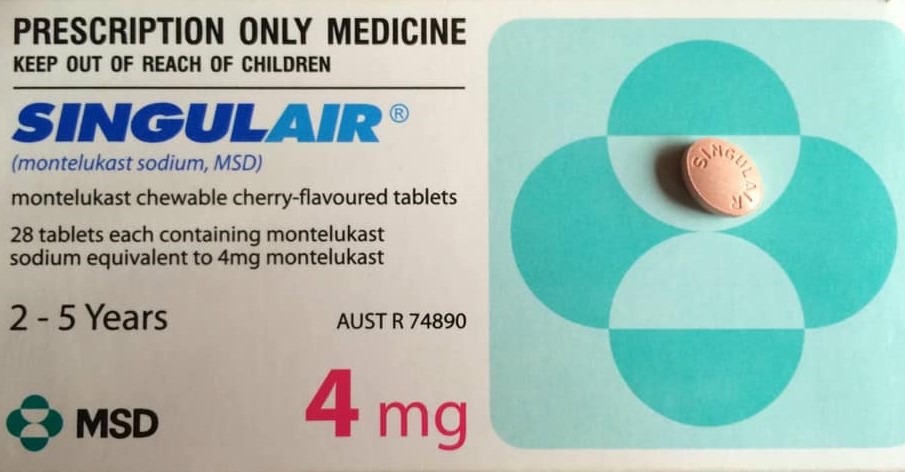
Do you or a loved one take Singulair (generic name is Montelukast) for asthma or allergies? Earlier this year, the U.S. Food and Drug Administration (FDA) acknowledged serious mental health side effects related to this popular medicine, prescribed to over 35 million people. The side effects include suicidal thoughts or actions, agitation, hallucinations, and depression. Since March 2020, the medication now requires a Black Box warning, due to the overwhelming evidence of serious mental health side effects.
According to A Guide to Drug Safety Terms at FDA, a black box warning “appears on a prescription drug’s label and is designed to call attention to serious or life-threatening risks.” Medline Plus, a website operated by the U.S. National Library of Medicine, has the following information about Singulair/Montelukast:
Montelukast may cause serious or life-threatening mental health changes while you are taking this medication or after treatment has stopped. You should call your doctor right away and stop taking montelukast if you experience any of the following symptoms: agitation, aggressive behavior, anxiety, irritability, difficulty paying attention, memory loss or forgetfulness, confusion, unusual dreams, hallucinations (seeing things or hearing voices that do not exist), repeating thoughts that you cannot control, depression, difficulty falling asleep or staying asleep, restlessness, sleep walking, suicidal thoughts or actions (thinking about harming or killing yourself or planning or trying to do so), or tremor (uncontrollable shaking of a part of the body). Be sure that your family or caregiver knows which symptoms may be serious so they can call the doctor if you are unable to seek treatment on your own.
~ National Institutes of Health
If someone you know takes Singulair/Montelukast, encourage them to contact their doctor to discuss whether they should continue taking the medication.
Benefits vs. Risks Medicine, whether over-the-counter (OTC) or prescription, has side effects. In the best case scenario, the benefits of any drug should outweigh the side effects. However, the FDA found that the benefits of Singulair/Montelukast often did not outweigh the risks.
To educate yourself about the side effects/adverse reactions of any FDA-approved medication, visit DailyMed, a website maintained by the National Institutes of Health (NIH). To help you make the best decisions related to your health, read Think It Through: Managing the Benefits and Risks of Medicines, a guide written by the FDA.
Report Adverse Reactions If you or a loved one have taken Singulair/Montelukast and have experienced any adverse reactions, you are encouraged to make a report to the FDA’s MedWatch Safety Information and Adverse Event Reporting Program. To do this, visit MedWatch to submit a report online or to download a reporting form.
Written by: Laura Stanton, MA, MS, Family and Consumer Sciences Educator, Ohio State University Extension, Warren County, stanton.60@osu.edu.
Reviewed by: Shari Gallup, MS, CHWC, Family and Consumer Sciences Educator, Ohio State University Extension, Licking County, gallup.1@osu.edu.
As the world finds its way through the uncharted waters of this pandemic, you may find yourself navigating your own course. With stay-at-home orders, canceled events and limited gatherings, we are all experiencing isolation and loss on some level. Perhaps you have even suffered from depression at some point this year. You’re not alone.
Fear and worry about health (your own and loved ones’)
Fear and worry about your job or finances
Concern about loss of support services you depend upon
Changes in sleeping or eating patterns
Inability to focus or concentrate
Decline of chronic health conditions
Increase of mental health problems
Increased use of tobacco, alcohol and other substances
With all of these stressful thoughts, it’s no wonder we may be feeling anxious, which can lead to depression. And while there is so much that is out of our control, there are some things we can do to take care of ourselves and those around us.
Cope with stress
Learn the facts about COVID-19. Just knowing the facts can reduce stress and help you feel more empowered.
Take time to relax and do some other activities you enjoy.
Connect with others
Talk with people you trust about your feelings and concerns.
Connect with your community- or faith-based organizations. While social distancing measures are in place, consider connecting in different ways: online, social media, phone or mail.
This pandemic won’t last forever, even though it may feel endless at times. Until then, use these tips to take care of yourself and to live healthy AND well!












 Live Healthy Live Well